
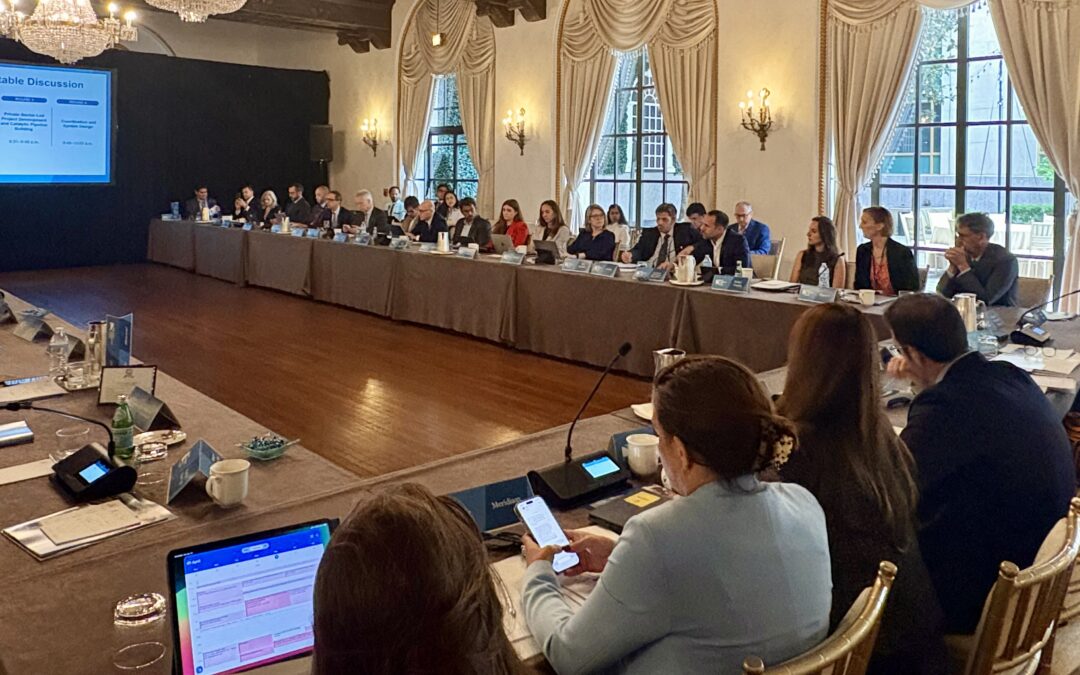
SIF was proudly represented at the 2026 IMF-World Bank Spring Meetings again this year, held from 13 to 18 April 2026 in Washington, DC, one of the largest annual global gatherings of finance ministers, central bank governors, multilateral development banks, private sector representatives, and civil society organisations.
Discussions this year focused in particular on the evolving economic uncertainties worldwide, debt sustainability and development finance alongside the need for mobilisation of private capital. This all in turn reflects an increased pressure on public budgets and echo’s the importance of strengthening financing frameworks for long-term sustainable development.
Alongside formal sessions, the Spring Meetings also provided space for bilateral exchanges for SIF and cross‑institutional dialogue with our partners, underlining the role of strong coordination and a strong strategy in the infrastructure project preparation processes in supporting investment and long‑term economic resilience.
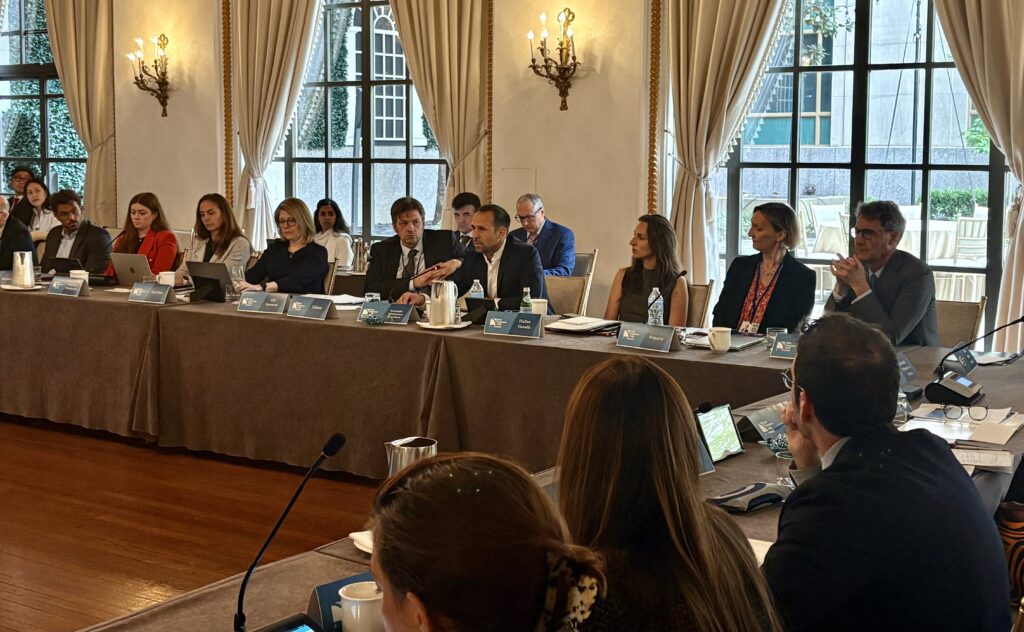
On April 23rd, SIF was also a panel member at an important workshop within the United Nations Department of Economic and Social Affairs (UN-DESA) event in New York, as part of the 2026 Financing for Development Forum.
The Self-Assessment Tool for Appraising Investment Readiness in Sustainable Infrastructure (STAIRS), developed by the UN DESA will be digitalised in SOURCE as an international project assessment methodology. It will enable governments to use STAIRS within Source as a first-layer self-assessment to evaluate the investment readiness of their projects, strengthening data accessibility for investors and serving as a critical enabler for mobilising private financing at scale.
Closing the $1.5 trillion infrastructure gap requires more than mobilising capital it requires fundamentally rethinking how the system is organised. Three principles consistently emerged as critical to delivering projects at the necessary speed and scale:
- Coordination demands a central anchor. Fragmented pipelines are slow pipelines. Systematic data collection, cross-institutional interoperability, and customisation to national frameworks are essential to moving projects forward efficiently.
- Bankability is a function of risk clarity. The barrier to private capital is rarely risk itself it is the absence of clear, structured information about that risk. Defining it precisely is what makes projects financeable.
- Standardisation is the prerequisite for scale. Consistent frameworks and processes reduce transaction costs and enable programmatic approaches that can be replicated across markets and geographies.

Upstream preparation, midstream structuring, and downstream financing instruments have historically operated in isolation. SOURCE addresses this by synchronising stakeholders across the full project lifecycle making investable infrastructure pipelines not just a target, but an achievable outcome.
Together, these engagements reflect SIF’s continued participation in key international discussions on infrastructure financing and project preparation, reinforcing dialogue with global partners engaged in shaping the future of sustainable infrastructure delivery.